Domestic Study Tour–Day One
Wednesday, November 5, 2025
Submitted by: Mike Parsons
Class XVII met in Manhattan and headed north to Marysville. The key narrative of the day was clear: challenge meets opportunity!
Upon arriving in Marysville at the newly renovated Landoll Lanes & Meeting Space, Don Landoll, Paula Landoll-Smith, and their staff provided an in-depth overview and tour of Landoll Corporation, illustrating its growth from a modest three-man welding shop founded in 1963 to a diversified global manufacturer with over 850 employees and more than one million square feet of production space across multiple locations. The story highlighted decades of innovation, a strong engineering foundation, strategic diversification, and an enduring commitment to people, quality, and community impact.
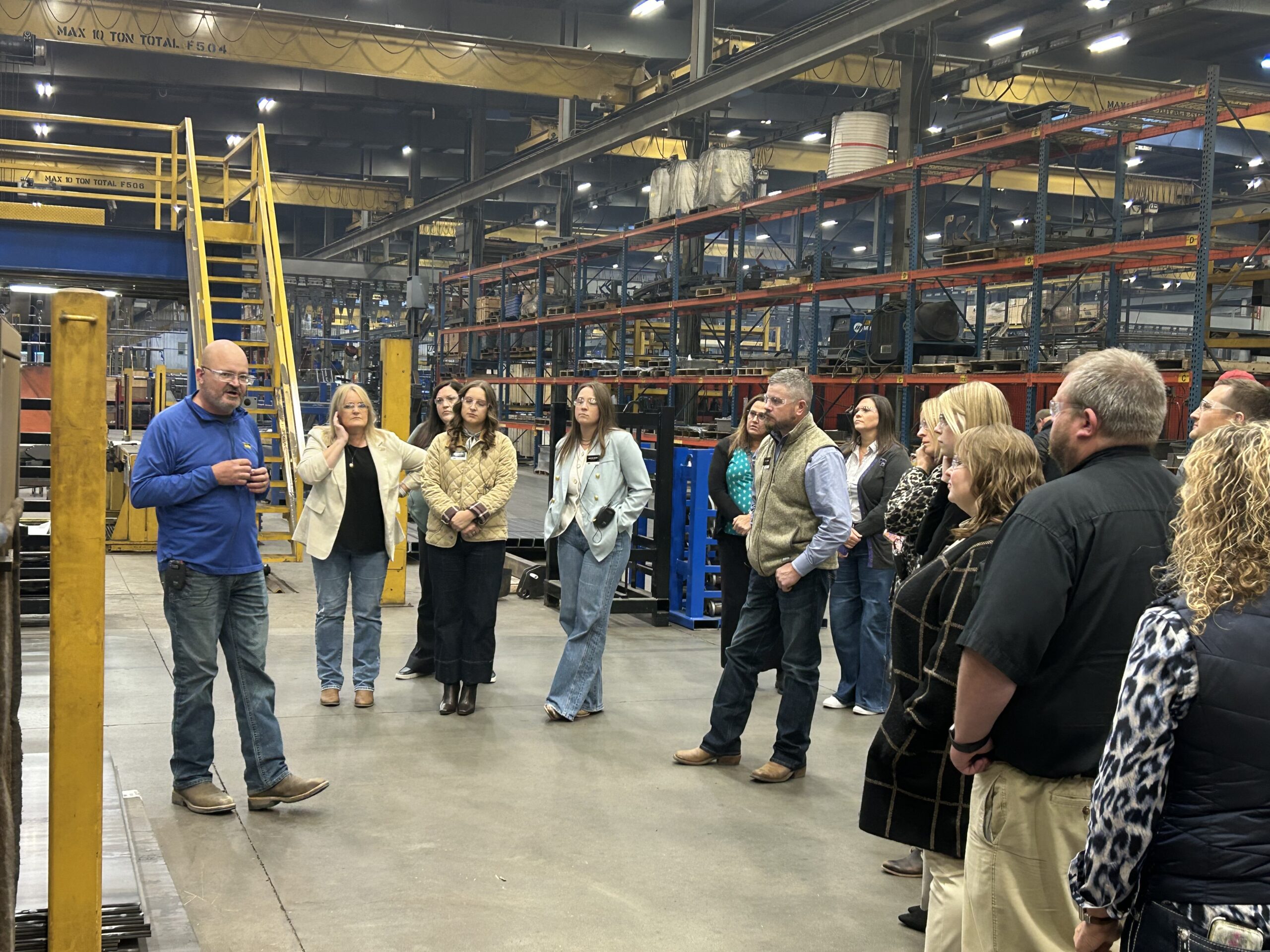
A central theme throughout the visit was how Landoll blends advanced technology with practical, common-sense leadership. Participants walked through the complete production lifecycle, from engineering and beam fabrication to robotics, finishing processes, assembly, testing, and final product preparation. Each stage reflected precision, continuous improvement, and a focus on minimizing downtime for customers.
The organization’s history of innovation was showcased through signature products such as the industry-shaping traveling axle trailer introduced in 1969 and now exceeding 27,000 units built. Detailed explanations demonstrated how Pro-E modeling, automated welding systems, CNC equipment, and large-scale lasers ensure performance, consistency, and structural accuracy.
Diversification has been a major driver of Landoll’s resilience and growth. The session highlighted strong market positions in agriculture, trailers, forklift systems (through Bendi and Drexel), and long-standing government OEM contracting dating back to 1984, including major aircraft de-icer programs and collaborations with military and aerospace clients.
The company’s culture emerged as a defining strength. Employee loyalty, vocational development, profit sharing, and a strong emphasis on natural abilities and craftsmanship reinforced Landoll’s belief that quality products come from empowered people. Stories shared during the tour illustrated a leadership philosophy centered on fairness, an ownership mindset, and continual learning.
Community involvement served as a memorable capstone to the tour. The Landoll family’s significant investments in local education, trades training, athletic facilities, and numerous civic initiatives underscored a deep commitment to giving back. These efforts support youth development, enhance local opportunities, and reinforce the legacy of a company dedicated to both business excellence and community well-being.
Class XVII was then treated to a bus and walking tour of Marysville hosted by Bruce Dierking, who revealed how a community’s history, resilience, and leadership can shape its future.
Marysville’s story begins at an important crossroads of American movement. Once a key stop along the Oregon Trail (and several others), the town later became a home station for the Pony Express.
Adding to the town’s charm and character are its black squirrels. These small ambassadors, protected by city ordinance, have become a symbol of local pride and identity. Their presence blends folklore, uniqueness, and community spirit into everyday life, giving Marysville a personality all its own.
While the community’s history is rich and memorable, Marysville also faces familiar challenges shared by many rural towns: fluctuating population, the need for renewed investment, aging infrastructure, and the constant pressure to transform challenges into pathways forward. What stands out in Marysville is how the right people, united with purpose, have repeatedly risen to meet those challenges with creativity and collaboration.
What we learned is simple yet powerful: in a small community, every challenge can become an opportunity when the right people come together with purpose, creativity, and commitment.
Next up was a conversation about the future of Ag-Tech from Realm 5.
When challenges meet innovation, transformation happens. That message echoed throughout Steve Tippery’s presentation, as he shared how data, automation, and AI are reshaping the agricultural landscape and beyond.
Founded in 2015 in Lincoln, Nebraska, Realm 5 was born out of a simple challenge: agriculture was connected in some areas, but large parts of the value chain, like grain grading, livestock monitoring, and inventory management, remained manual and fragmented. Steve and his team saw an opportunity in this gap. Their mission became clear: connect the unconnected and automate the overlooked.
Today, Realm 5 stands at the intersection of agriculture and technology, leading innovation that amplifies productivity while addressing labor shortages and safety risks.
Realm 5’s flagship line, SmartSites, shows how every operational bottleneck can become an innovation opportunity:
· Ag Retailers: Frontier Co-op automated fertilizer tracking, replacing spreadsheets with real-time cloud data. The result? Accuracy improved, and the manager finally took a vacation.
· Grain Processing: An AI-driven grading system now evaluates 200 images per sample and uses “digital smell” to detect contaminants 100 times better than the human nose.
· Livestock Operations: With Dairy Farmers of America, Realm 5 built a LiDAR system that monitors feed piles automatically, preventing shortages and optimizing logistics.
Key takeaways from the conversation:
· Every solution began with a pain point and evolved into a practical innovation.
· Artificial intelligence is more than a buzzword, it’s a productivity multiplier. The class discussed how AI helps people “10x” their impact by automating repetitive, unsafe, or low-value tasks.
· The farms of tomorrow may look very different. Instead of massive, single-operator machines, expect fleets of smaller autonomous units working collaboratively reducing soil compaction and risk.
· Every opportunity carries its own challenges, and AI is no different: adoption barriers, cybersecurity, sustainability. These issues remind us that innovation isn’t about comfort, it’s about courage.
Lesson Learned: Where Others See Risk, Leaders See Opportunity!
Domestic Study Tour––Day Two
Thursday, November 6, 2025
Submitted by: Edie Lanza
University of Nebraska Innovation Campus Introduction–Kate Engel, Director
The campus was purchased from the Nebraska State Fairgrounds for $21 million through appropriated funds from the state government and started in 2010. They demolished 68 of the 70 fairground buildings in the process of building the campus which now takes up 570,000 sq. ft. out of the ground, serving 70 companies with 1,100 employees on campus. Ultimately they have a goal of 2.2 million sq. ft. and are in need of high bay flex space next.
The goals of the campus include:
To get to this stage they had to get past two crucial stories:
There was simultaneous anger and excitement about the development of the innovation campus and it came on the heels of the Haymaker development and investment in UNL sports complex additions which have driven traffic to the area and make it a hub for the community and campus to gather.
Governing of the Campus:
In their current phase they are adapting policy from what cannot be done to policy that is focused on what can be done to better serve their entrepreneurial partners.
A couple of key partners:
The Combine–Brennan Costello, Manager
Purpose: Incubator for ag tech founders with a goal to move founders forward.
Part of Invest Nebraska, a state funded venture capital fund started in 2001 because Nebraska was 50th in the nation for investments into new businesses. Now they rank in the mid-20s.
They maintain a broad definition of “tech” and work to serve the diversity of agriculture seen in the state of Nebraska. They are focused on founders who are from Nebraska or those who are relocating to Nebraska.
How they work:
Main spaces they work in:
Example Companies:
Larger growth cycles happen in down cycles of the ag economy because the market for innovation is ripe.
Company Testimonies:
Boveye (Andrew)
Key learnings:
Molecular Tree Evolution (MTE)
Key learnings:
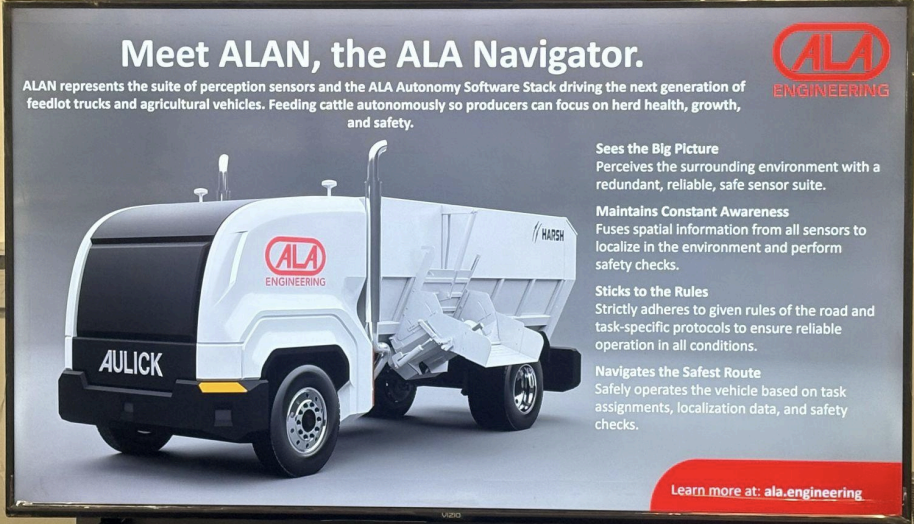
ALA Engineering
Next steps:
Limitations:
Cost goal: 30% higher than the cost of a regular feed truck. Variables for the size of truck but sensors and computer system are fairly fixed. Overall, the solution saves the cost of 1-3 drivers per truck
Key Takeaway: Entrepreneurship, technology and innovation is an opportunity to solve challenges but it needs to happen in the midwest, not on the coast for agriculture.
Grit road Venture Fund–Ben Williamson, Founder
Venture capital fund that invests in ag tech that will impact the midwest.
Two challenges to raising money initially:
Key question for potential partners: Can you be strategic to us?
Vetting process:
Food for Thought: How do you balance the goals of creating efficiency with AI with the business development goal of creating jobs?
Throughout history we can see that we’re capable of adapting to new technology. There are things AI can’t do, like build relationships, so there will always be a place for humans to have opportunities. AI is a disrupter but it’s not the first. We’ve dealt with them before. Innovation gets us to rethink our opportunities.
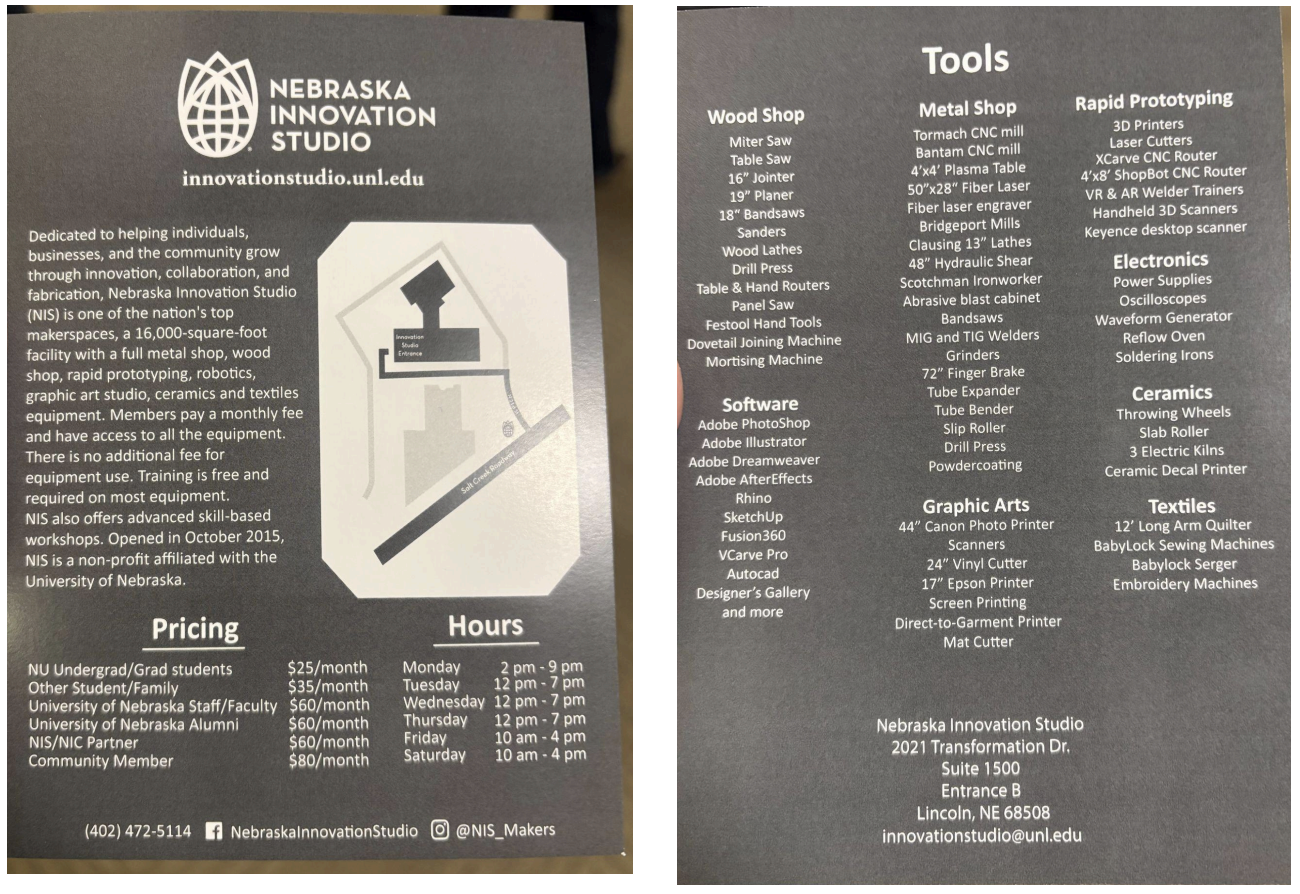
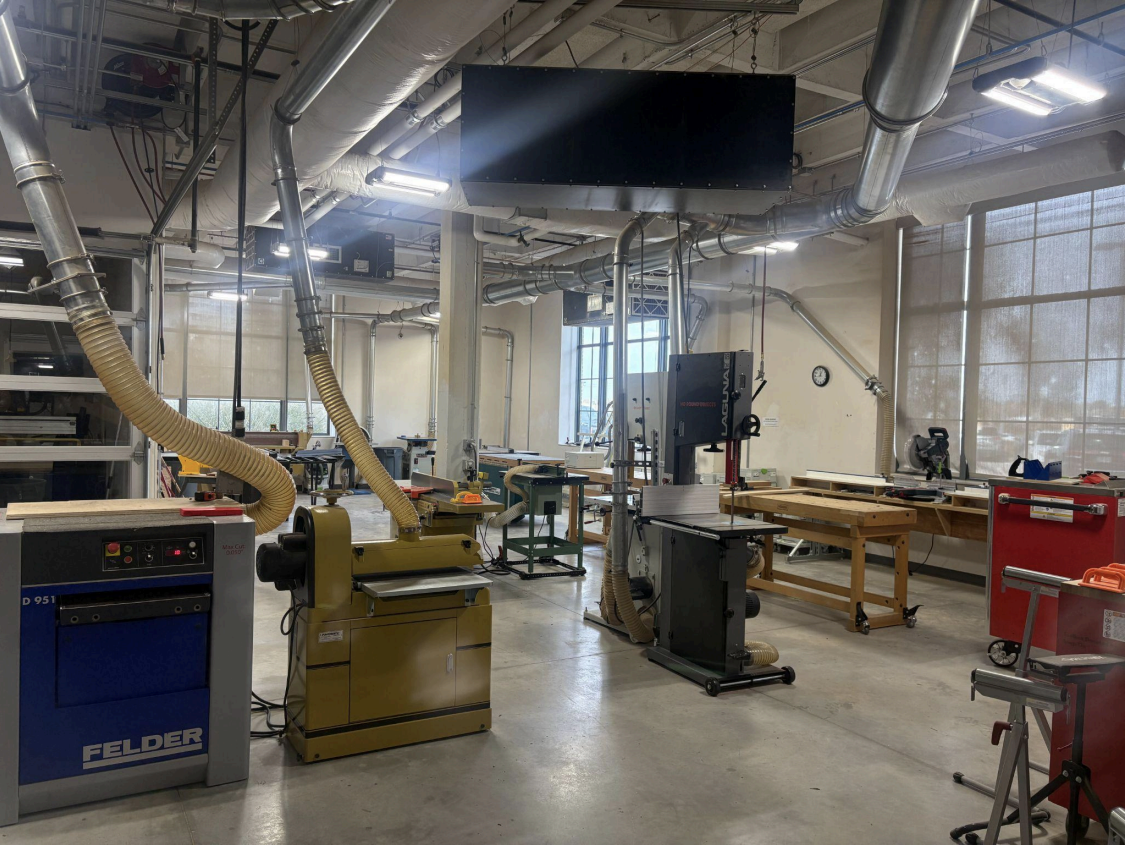
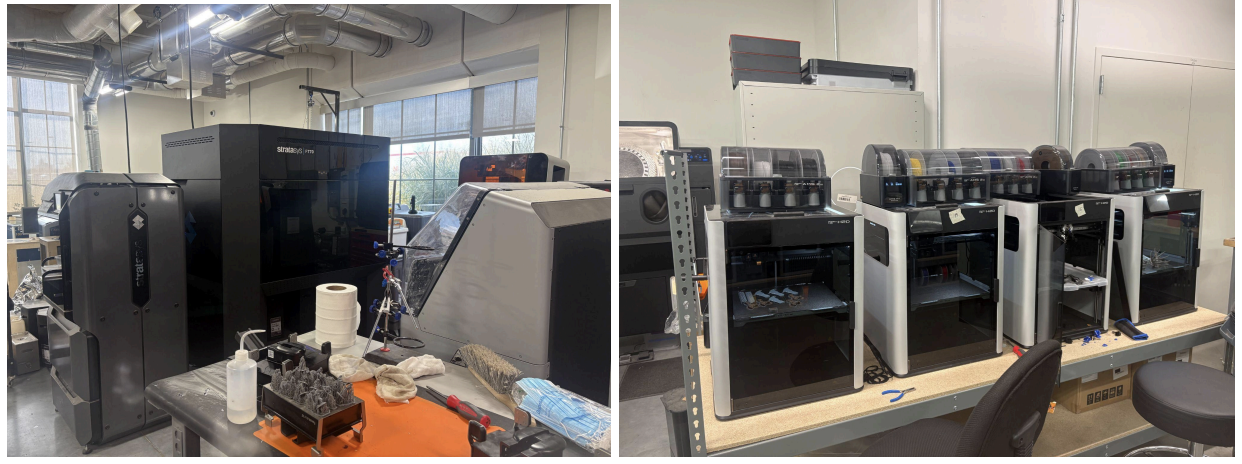
Innovation Studio –David Martin, Director & Travis
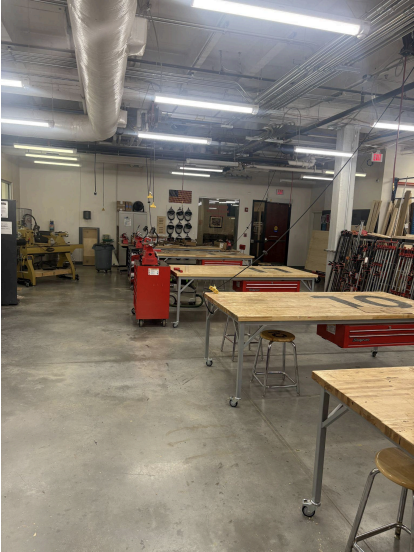
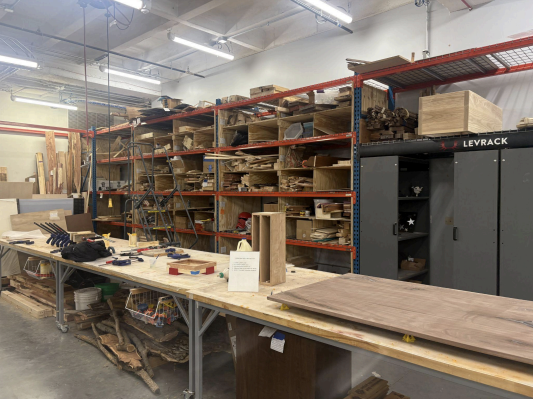
Workroom & Storage
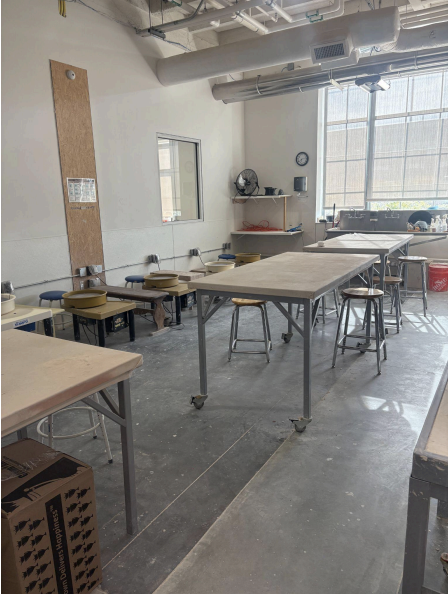
Pottery Room
Sewing Room
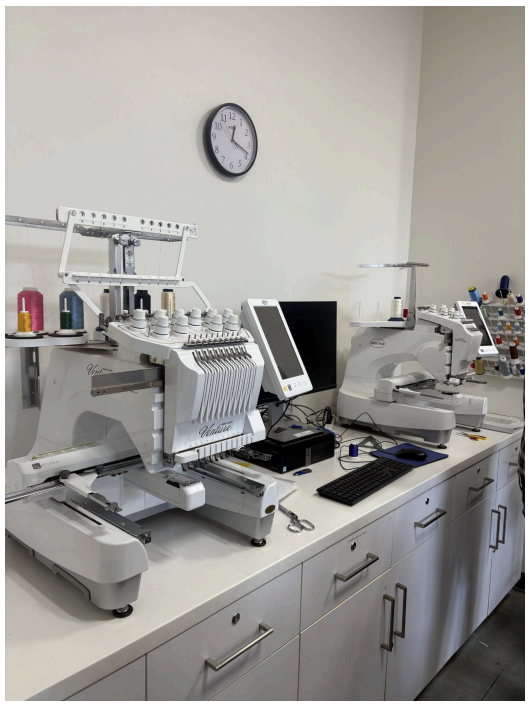
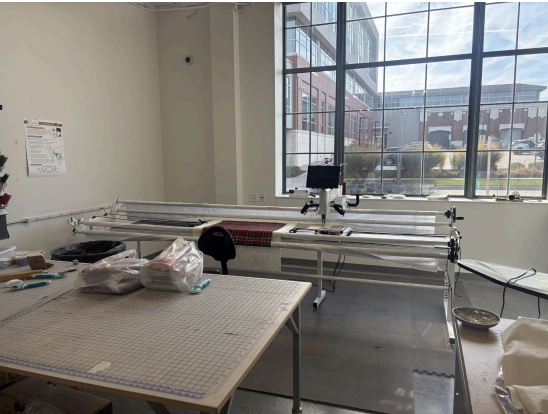
Woodshop:
3D Printing:
Marble Technologies–Jordyn Bader, Co-Founder & Brianna (meat scientist)
Thesis: There’s tech and automation that can solve and automate challenges in a chaotic and fast moving environment.
Solution:
Packing – Pack Off Line – identifying and sorting cuts of vacuum-sealed cuts of meat into boxes.
There are typically 35 cuts of meat going through the line at 200 cuts per minute. At Creekstone that equates to 80,000 cuts per day. By automating the identification and sorting they are seeing a 50% labor savings.
The machines also do quality assurance checks to ensure that AI agrees that the product in the box matches the label.
They can also increase consistency of size of cut within a box to give customers better uniform boxes for a more consistent customer experience. To the point where they could create additional skews for their product based on cut size.
40 person team (from scientists to engineers to business people).
Training AI: used over 30 million images of cuts. First concentrate on volume of images and then fine tune with quality images.
Timeline:
Started with medium sized facilities to prove product’s capability before they will go after big packers.
Key Takeaways:
Engler–englerjourney.com Thomas Field – tfield2@unl.edu
Formed in 2010 from a $20 million gift from Paul Engler Family that was given incrementally.
Goal: transform from creating employees to employers.
Mission: Embolden our people on the courageous pursuit of their purpose through the art and practice of entrepreneurship.
Culture first: student leadership and accountability of professionals
Key Thought: Build people that build companies/enterprises that build communities.
Core Principles:
Attract students who love the mission and buy into the principles.
Two rules for business development: (they decide based on their interests and the market)
Important moment for Paul Engler: taking a risk and having someone affirm it.
Book recommendation: The Infinite Game, Simon Sinek
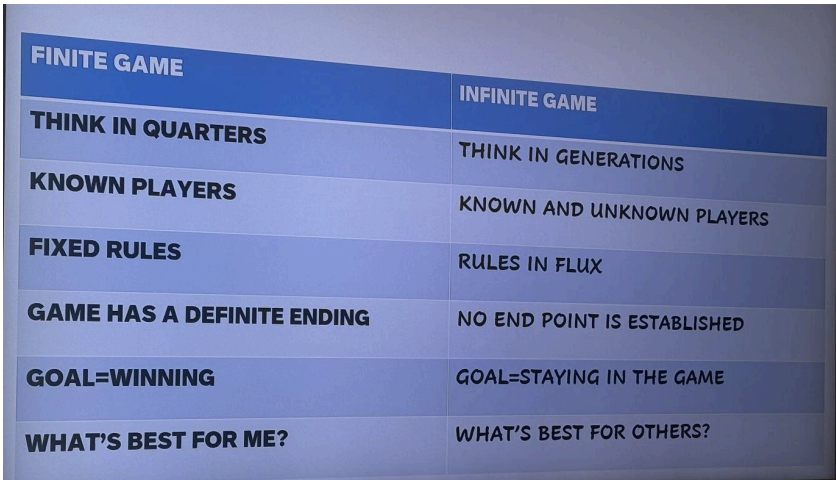
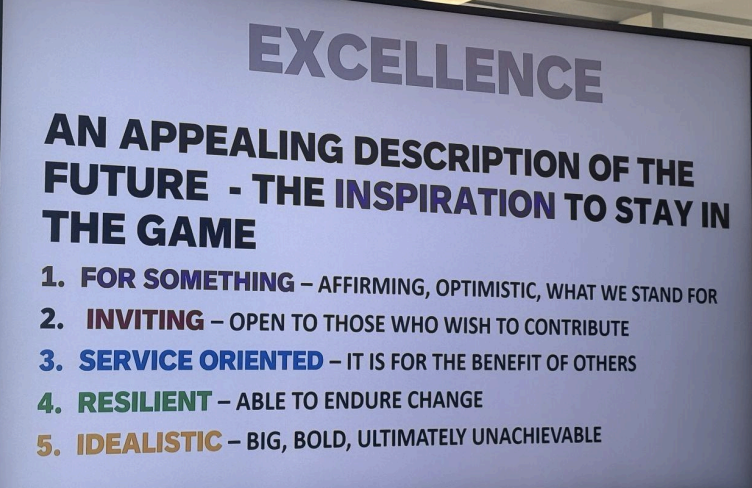
5 Year Impact Report (report on first 10 years – getting ready to do the next 5 year report)
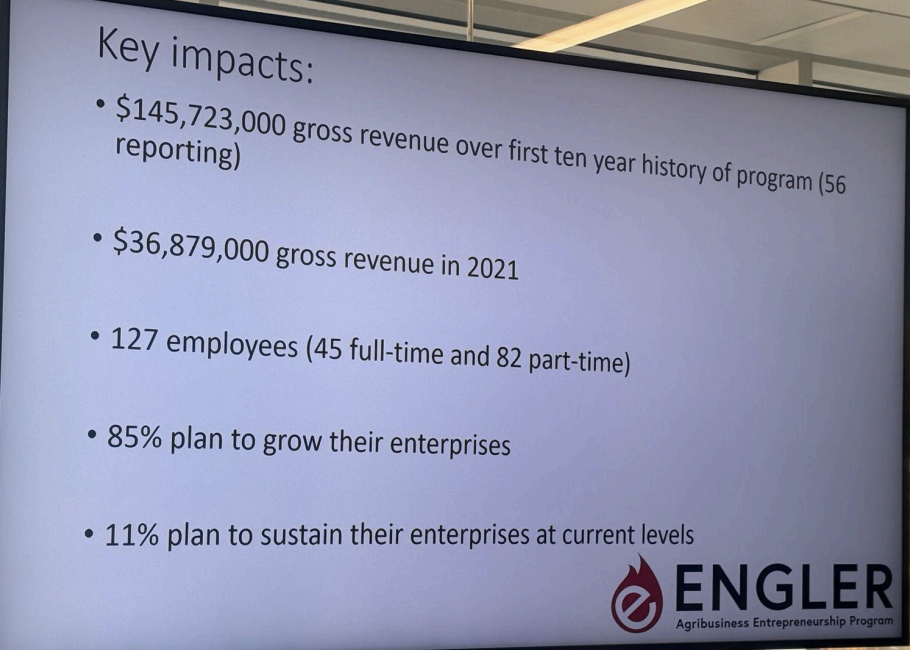
Next step: building an alumni program to connect and support the Engler Community with continued education, business to business networking and deal making support.
Key Takeaways:
Student Panel: Kendall, Lexy, Kaden
What matters most from the program:
Barriers to overcome:
What are you excited and apprehensive about returning to rural communities after college:
15% of the students in the Engler program leave with businesses they are fully employed in after college. The rest have still gained entrepreneurial skills and confidence to take steps and lead organizations and companies in the future. You never know when the start up will happen.
Key things they’ve learned from Engler that could be replicated elsewhere:
Teaching idea: get a bus and take students to visit 50 businesses over the course of 5 years to take the fear out of running a business and expose them to all sorts of ideas and industries.
Key takeaway: There are no capes on anyone in Silicon Valley. They look like you and me. We have to teach our people to fly.

Domestic Study Tour––Day Three
Friday, November 7, 2025
Submitted by: Lauren Moylan
KARL Class XVII spent the day at the Federal Reserve Bank of Kansas City examining how monetary policy, agricultural economics, and community banking directly influence Kansas communities. The seminar brought together Federal Reserve leadership, economists, and banking professionals to provide insight into the financial systems that shape rural opportunity, risk, and resilience.
The day began with an overview of the history and structure of the Federal Reserve System led by Tim Todd, Tenth District Executive Writer and Historian. Todd explained the origins of the Federal Reserve and the rationale behind its regional structure, emphasizing the importance of the Federal Reserve Banks in reflecting the economic realities of their districts. For Kansas leaders, this reinforced that the Tenth District structure exists to ensure regional and agricultural perspectives are represented within national monetary decision-making.
Associate Economist Ty Kreitman followed with an in-depth look at the current agricultural economy. His presentation connected macroeconomic conditions to on-the-ground impacts felt by producers, lenders, and ag-related businesses. Kreitman discussed interest rate pressure, commodity markets, land values, and cost structures, reinforcing how quickly conditions can shift in today’s environment. A key takeaway was the importance of understanding economic cycles and managing risk in a period defined by volatility, tighter margins, and ongoing uncertainty across global markets.
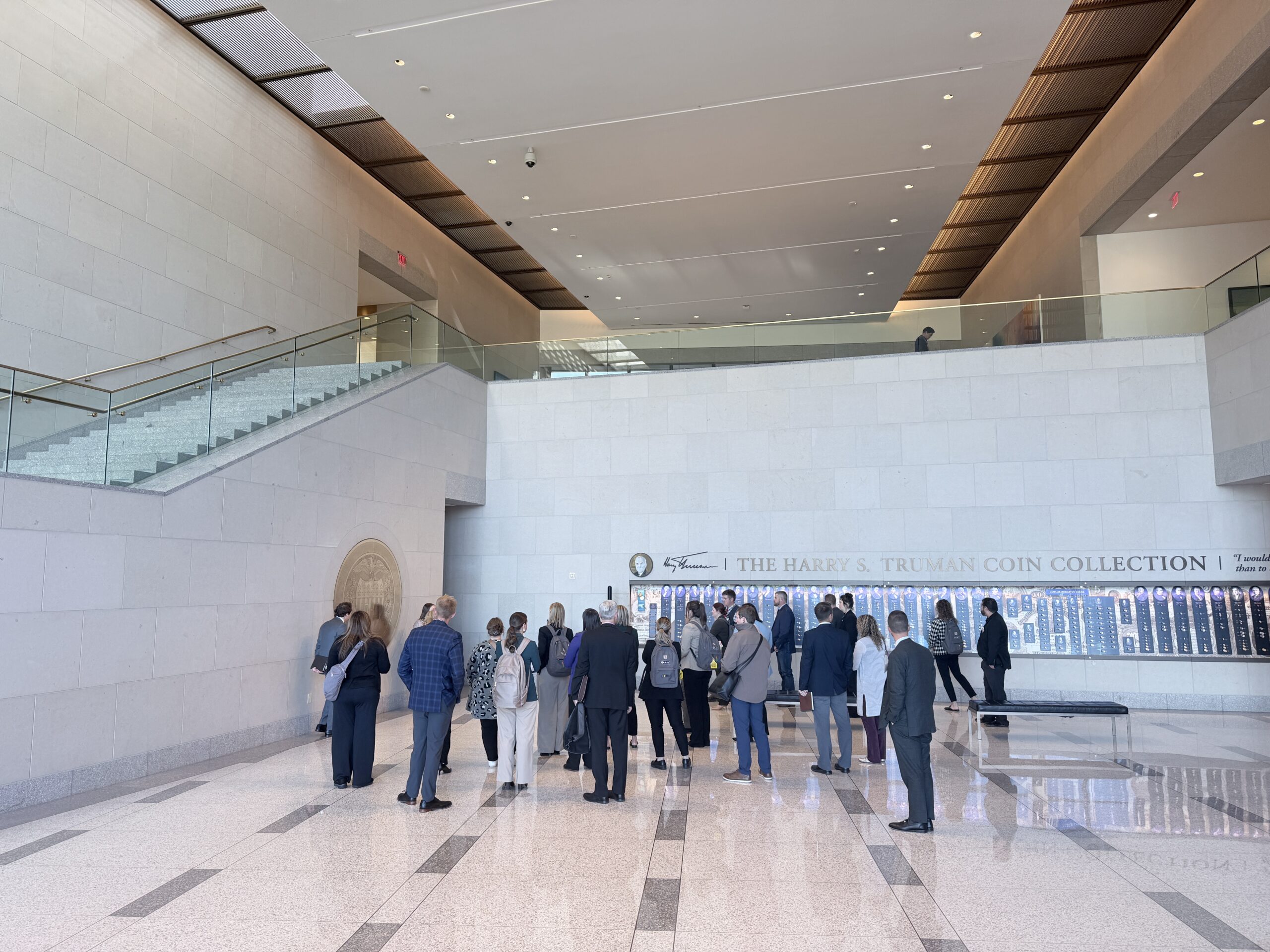
After the break, Joe Gruber, Executive Vice President and Director of Research, addressed the role of community banks within the broader financial system. Gruber emphasized that community banks are uniquely positioned to serve rural economies through relationship-based lending and long-term commitment to local customers. He underscored the value of local decision-making, trust, and stability, particularly in agriculture-driven communities where financial nuance matters. The remarks reinforced how community banks play a critical role in economic development while serving as a bridge between local borrowers and the national financial framework.
During lunch, participants heard remarks from Jeff Schmid, President and Chief Executive Officer of the Federal Reserve Bank of Kansas City. Schmid spoke to the responsibility of leadership within the Federal Reserve System and the importance of public trust. He highlighted why rural and agricultural voices matter in economic conversations and challenged participants to view themselves as informed leaders who carry perspective from their communities into broader dialogue. His remarks tied together the day’s themes of service, stewardship, and accountability within complex systems.

Following lunch, the class toured the Federal Reserve’s Money Museum, providing a tangible look at currency management, security, and the institutional setting where regional and national economic decisions are made. The experience reinforced that while economic policy may feel abstract, it is grounded in real systems, real data, and real leadership accountability.
The seminar concluded with a reflection and discussion among the class during the return trip. Participants cited a stronger understanding of how the Federal Reserve operates, a deeper appreciation for the role of community banks, and clearer insight into the economic forces shaping Kansas agriculture.
The day reinforced the interconnectedness of finance, policy, and leadership, and highlighted the responsibility KARL participants have to understand these systems as they continue serving their industries and communities.