Spain: International Study Tour
Day Six
Friday, March 15, 2024
Submitted by: Luke Amend
After breakfast at the hotel, the group left the town of Seville via tour bus at 8am. En route, we stopped to tour a husband and wife run pottery business. The potter uses a foot powered pottery wheel to produce many of his pieces. After they are created, he uses a wood fired kiln that is over 100 years old to fire the pieces.
We continued on to the San Sebastian citrus cooperative. Founded in 1963 by a group of citrus farmers, the cooperative give the farms greater power in producing and selling their citrus products. Two of their specialists met with us in one of their orchards, where we discussed the varieties that they grow plus the current issues that they face. Their two largest issues are labor shortages, and European Union (EU) regulations. They employee harvest labor from Romania an Africa. The EU regulations create higher production costs which make competition with other countries that are outside the EU difficult. Following time in the orchard, we toured their processing facility. The facility cleans, sorts, packages, refrigerates, and ships products for the cooperative.
We continued our bus drive in the autonomous community of Andalucia to the town of Cordoba. Once there, we walked into town over a bridge built during the Roman period into the historic town. After lunch, the class took a self-guided tour of the Capilla De San Clemente which is also called the “Mosque-Cathedral of Cordoba”. The building started as a mosque with the original construction finishing in 787 AD. After Christian forces captured the city in 1236, the mosque was then converted into a Cathedral. The building remains the City’s cathedral where mass is still held daily. We left Cordoba mid-afternoon and continued on to our Hotel in Ubeda. The night concluded with a group dinner at the hotel.

Spain: International Study Tour
Day Seven
Saturday, March 16, 2024
Submitted by: Mary Marsh
We woke up the morning of March 16 in the city of Ubeda in the province of Jaen, almost 3 hours east of Seville and after loading up our belongings, we bused on over to our first stop of the day, the olive oil co-op.
The evening before, as the bus pulled into the providence of Jaen, we saw acres and acres and miles and miles of olive trees. They went from the highway and stretched in all directions out towards the snow covered mountains. This really set the stage for what we were about to learn the next day.
When we got to Agricola De Bailen Virgen de Zocueca SCA, we met our tour guide for the morning. Juan Antonio Parrilla Gonzalez, marketing advisor for the Co-op, and professor of economics at the University de Jaen, started off the tour by explaining the origin story of the co-op. Arising out of the need to unify olive farmers in the area, increase marketing abilities and opening new demand globally for the Spanish olives, this co-op has taken the olive oil production and made it into an experience by having a kitchen, olive oil tasting and gift shop on the premises. This co-operative is composed of over 1,000 farmers in a 100 kilometer radius of the area (around 62 miles, roughly). 70% of Spanish olive oil is ran through this co-op. They process 20 million olives for olive oil. Jaen alone produces 30% of the world’s olive oil. We moved on to discuss the production of olives. The olive industry, along with all of Spain’s agriculture, is facing two major issues: the aging population of farmers, and the lack of water. Spain is facing a multi-year drought, thus hindering the production of olives. As they are shorted water, the fruiting body does not produce much meat around the pit. The 2023 olive crop was what Gonzalez called a “disaster” with olive production at only 65% of a normal harvest. This upcoming year is projected to be a bit better, but still 55% of normal. The older trees that used more traditional methods of growing were dryland. While the more modern methods utilized drip system irrigation. Modern, more intensive management of the olive trees are identified by their tighter planting spacings. The trees grow in rows more clustered together and form a hedge. The farmer then will continue to prune and hedge the trees as they continue to grow. This is a method for the harvesters which will be explained later in this blog.
They have two different varieties in Spain but the picual variety is the most desirable and highly marketable one. This variety was developed in Egypt making it an extremely hardy and heat resistant tree.
A year in the life of an olive tree at production age starts out during winter dormancy. As the weather warms up in the spring, the trees begin to break dormancy and put on buds. This time is a very delicate time in the olive crop’s life. The weather can’t get too hot, and a late freeze or a rain could be detrimental to the brand new crop. As summer goes into spring, the olives form and grow. In June, the trees are working so hard against the heat. In an effort to save themselves energy, they drop some of the crop. The tree then goes into another state similar to dormancy but this time triggered by the hot weather. September is when the fat is produced in olives, a time called “lipogenesis”. This is when farmers will start to keep a closer eye on the crop, running test samples to know when the quality is the best and when the olives will be ready for harvest. Harvest starts in October and can go into December.
They have two methods of mechanical harvesting. The older trees that grew more naturally were harvested using a shaking method. The shaker machine grips a trunk of the olive tree and shakes the fruit from the trees. Before being shaken, the workers put down a drop cloth to catch the fallen fruit. The other method is very similar to how grapes are harvested. The harvester fits right on top of the olive tree row. This self-propelled machine drives along the row, while the internal, mechanized shakers and collectors are harvesting and gathering the fruit into collection baskets on the go.
After harvest, the olives are brought to the facility, where they are unloaded, cleaned and sorted based on size and type. The fruit is moved to the mill. In the past, they used grindstones to crush the olives to get the oil, but since the 80’s it is more of an extraction process. Today, olives are cut up into a fine paste. The paste is then cycled through water, where the oils and water separate off. This oil is then sent off to be further processed, while the remaining solids are sent into green storage to be used for energy production. The oil is stored in big, food grade bulk tanks that keep out all elements that cause rancidity: light, oxygen, temperature. Here, oil can sit for 10 months if properly stored.
There are two types of oil this facility can produce: food grade, extra virgin olive oil and lamp oil. Lamp oil is strictly for refineries. The facility has a 70:30 ratio between extra virgin olive oil and the lamp oil. Price of the oil is dictated by the category of the olive oil is based on 8 different parameters, including acidity, antioxidant levels and the fruitiness. So, farmers want their crop to meet these 8 parameters in order to get a premium for their crop.
After the tour of the facility, we got to head inside to taste two different olive oils. Gonzalez showed us the proper way of taste-testing olive oil. Between the two samples, we were supposed to smell and taste one bolder, pure Picual olive oil and another, softer kind. Then we had an amazing lunch in the restaurant they had on site..
Our next stop after one of the prettiest bus rides any of us could have ever been on, led us up into the foothills of the Sierra Nevadas into the town of Grenada, home of the Alhambra. The Alhambra is a palace and fortress and was in the consideration for being on the 8 Wonders of the World. The name means, in Arabic, “The Red One” is based on the color of the clay walls the buildings are made from. No details were spared when it came to the Alhambra. Doorways and walls had Islamic prayers carved into them. This place was like an oasis to the islamic people. The waters from the melted snow come into the fortress and would supply all the water needs. From sanitation to hydration and to decoration water was a key feature of the fortress.
The Alhambra has been a public monument since 1870, but did not become a UNESCO World Heritage Site until 1984 but has inspired many different people, including American author Washington Irving who lived there and wrote essays about the Moors.
After our quick tour of the Alhambra, we were free to explore the city of Grenada.

Spain: International Study Tour
Day Nine
Monday, March 18, 2024
Submitted by: Kari West
Madrid / Toledo–Buenos Dias from Madrid. As we boarded the motorcoach for our day of technical and historical visits, we drove through a heavy crop and livestock region known as La Sagra, an Arabic phrase meaning “the cultivated field.” As we ventured southwest to the region of Castile-La Mancha, in south central Spain, we talked about the importance of the Castile region’s influence on craft beers from the wheat and hops grown in the area, as well as the small pockets of Cornicabra “the goat’s horn”. The Toledan Sagra features roughly 1100km2 which is roughly 428 square miles of generally flat landscape suitable for crops and livestock.
TECHNICAL VISIT TO RUIGAN – a generational feedlot operation
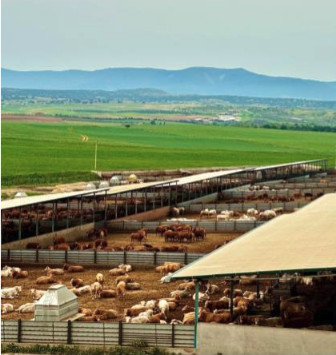
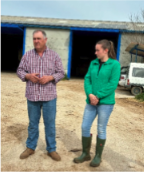
Upon arrival to Ruigan, we met a feedlot owner, Luis, and his daughter, the operation’s veterinarian. They welcomed us to their 7,000 head feedlot and we followed their visitor prevention guidelines to be able to walk around the operation. They were proud to share their family feedlot and answer any questions that we had. In addition, they were open to input on how livestock production is done in the U.S., to where they can learn and benefit.
He provided some history on the operation, which was started 51 years ago by his father. He has been a part of the operation “Todo mi Vida”, my whole life. They then walked us through some significant challenges they face as livestock producers in the European Union (EU).
Note: quotes included in this are from interpreted conversations with the owner and his daughter.
What is the biggest challenge today in production agriculture in Spain?
How do you counteract the negativity toward animal agriculture?
What are other concerns when looking at the beef industry in Spain?
Compare cattle operations in Spain to the United States:
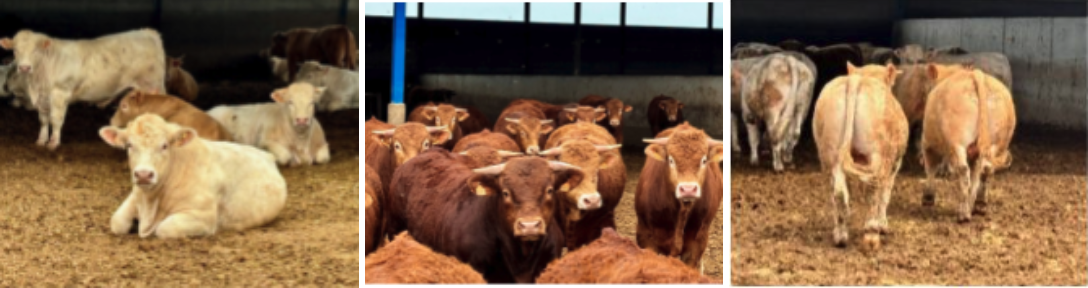
They went on to share that in Spain prevention is the best medicine. There are strict transport protocols, and a lot of time is spent on the front end in preparing animals as they arrive. Because they are coming in from other parts of Spain, France and Ireland, they are placed in quarantine for the first 40 days on the farm at the input lot. The owner said that the difference between a good and bad feedlot manager is how they control the health of the herd and how they address efficiencies. By carefully managing from start to finish can mean an additional $150 euros per head of profitability.
So in order to put the best foot forward, all cattle are brought in, processed, and vaccinated with IBR/BVD, Blackleg, and 8 way. They are kept in quarantine while they get their two rounds of shots. Also during this time, it allows them to clean and rest the facilities. Once a pen of cattle are moved out, the pens are thoroughly cleaned and left open for at least 30 days to allow the sun the help in the sanitizing process.
Their management methods have resulted in reduced mortality rates among the feedlot cattle, which as an all-natural operation, they are pleased with the numbers. They expect a death loss of less than 1.5% during intake, dropping to less than 1% during the feed period.
What size are the cattle coming into the feedlot?
It varies based on the country they are being shipped from.
If there are no breeding interferences, how are you selecting for genetics that improve performance?
There is a competitive market for strong, healthy animals. There are several factors that they are looking at when buying feeder cattle:
It seems there is a lot of trust placed in the cow-calf producers who are marketing these animals to the feedlots, and many are established, repeat producers.
Talk a little bit about the feeding program at the feedlot:
Efficiency and rate of gain is the name of the game. They are constantly analyzing the manure and adjusting rations because a major expense in their operation is the feed. Rations include purchased blends from the local cooperative. They feed barley, corn flour, corn gluten., soy meal along with straw as a roughage component. All bulls are on free choice feeds via creep feeders within each of the runs. Rations are adjusted seasonally for better efficiency. They are on feed roughly 7-8 months. Water quality also seems to be a concern, the bulls have access to fresh, clean water, direct from a water plant on site.
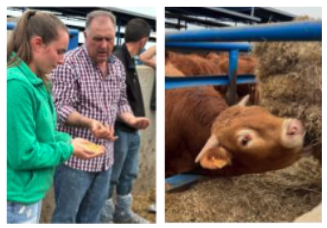
While all of the bulls are source verified and tracked via a governmental tagging system, the use of sensor and digital monitoring is not prevalent at the lot. They are moving toward implementing better technology to be able to assess both the health and feed data.
Ownership of the bulls does not end at the feedlot
Ruigan has developed a business model where they buy feeder calves, bring them to finishing weights, and then follow them through the processing facility. After harvest, the carcasses are aged from 21-30 days or more. The finished product is then direct marketed through contracts to meat shops and supermarkets across the EU.
For years, they were exporting beef to other regions outside of the EU, but now, they strictly sell within the EU. He explained that demand is going down for beef cheaper products of worse quality are becoming more readily available to consumers.
It was very clear that the producers at Ruigan are passionate about raising quality beef in the European Union and learning as much from us as we learned from them. Luis left us with the following thoughts: no matter your age, always be willing to learn. It should be a constant evolution of new practices and processes to improve.
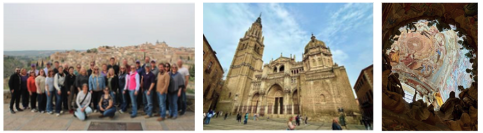
The rest of the visit to Toledo was filled with stops to explore local history and culture.
Toledo is an ancient city set on a hill above the plains of Castile – La Mancha. It is known for its medieval Arab, Jewish and Christian monuments in its walled old city. Things you should know: Toledo Cathedral is one of the greats; Toledo Swords are world-famous; it is a World Heritage Site, for good reason; and marzipan was created here, and is still a culinary art.
.